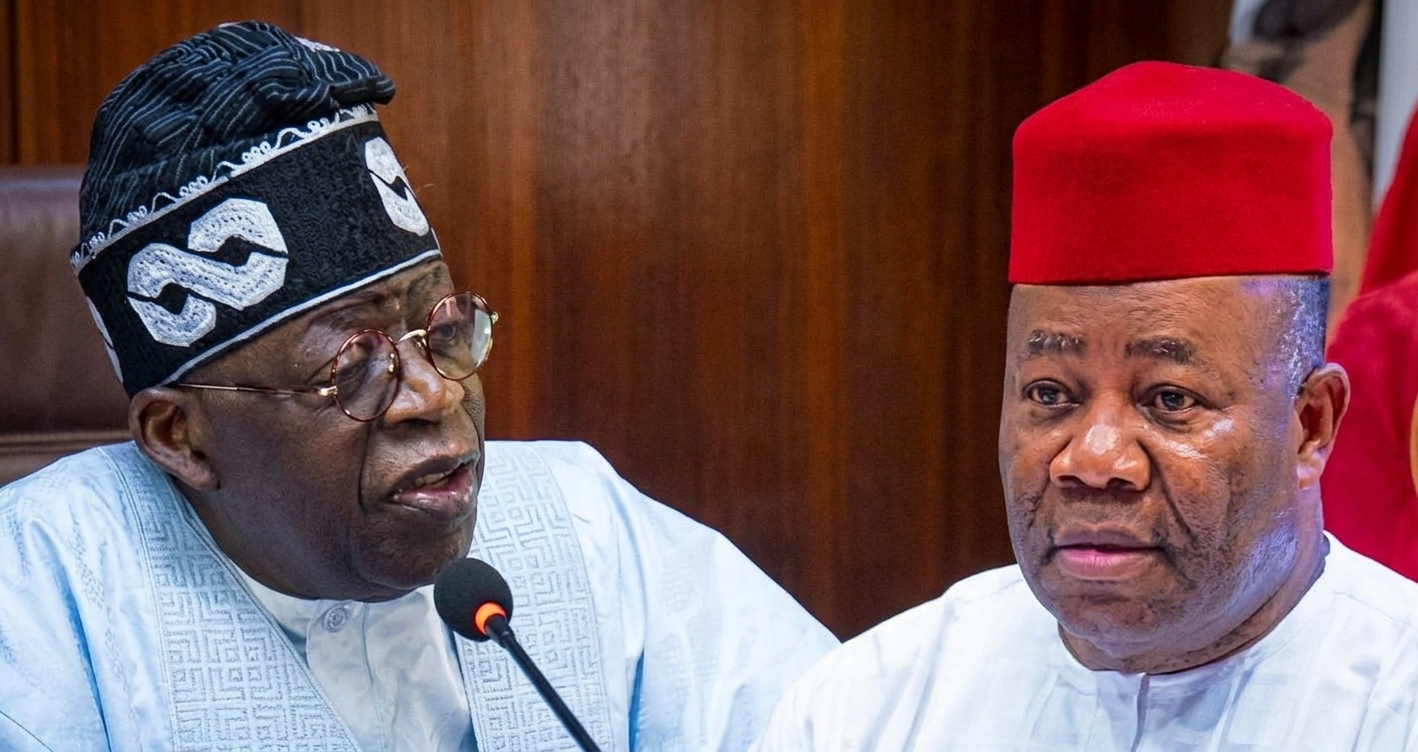
President Tinubu and Nigeria’s National Assembly: Turning Cooperation into Progress For Nigeria and Nigerians.
By Emeka Nwatu, Esq
One of the most valuable achievements of a presidency is the ability to make the institutions of government work together. Citizens experience that achievement when a proposal becomes a workable law, an agreement acquires legal force and a public programme begins to reach its beneficiaries. President Bola Ahmed Tinubu’s cordial working relationship with the National Assembly deserves recognition on precisely these grounds. The relationship has helped give the Renewed Hope Agenda a legislative foundation and sustained the institutional coordination needed to pursue reform. In my judgment, this capacity to build a productive constitutional partnership is a significant achievement of the administration and a legitimate reason for Nigerians to support its continuation and President Tinubu’s re-election in 2027.
The constitutional basis is straightforward. Sections 4 and 5 of the Constitution of the Federal Republic of Nigeria 1999, assign legislative and executive powers to distinct institutions. Sections 58 and 59 provide the machinery for federal lawmaking and presidential assent, subject to the Constitution’s exceptions. Sections 80 and 81 regulate public expenditure and budget proposals. Sections 88 and 89 preserve legislative investigation and evidence-gathering powers. These arrangements require institutions with separate mandates to interact responsibly. [1]
A President needs legislation and lawful spending authority to carry important policies into effect. Legislators need information, implementation reports and executive responsiveness to fulfil their responsibilities. Constructive cooperation helps these obligations converge around the public interest. Its democratic value depends on respect for each institution’s powers and a willingness to subject decisions to examination. This makes the working relationship between Tinubu’s executive and the 10th National Assembly, led by Senate President Godswill Akpabio and House Speaker Tajudeen Abbas, an important part of the administration’s record. It reflects contributions from both sides: presidential engagement, parliamentary leadership, committee work and the participation of legislators exercising their own electoral mandates. [2] The commitment has remained visible. In a statement published on 02 October 2026, the Senate President reaffirmed the National Assembly’s support for the administration’s reforms while referring to separation of powers and checks and balances. The significance lies in the institutional approach being advanced: elected officials can pursue common development objectives while retaining distinct responsibilities. [3]
For Nigerians, the practical advantages of such a relationship are substantial. It reduces the risk that necessary government business will become trapped in avoidable disputes. It creates channels through which disagreements can be discussed, proposals refined and implementation problems addressed. When those channels work, public administration gains a better chance of responding to national needs with continuity and purpose.
Consider what prolonged institutional friction can cost. An education programme may await a legal framework; a wage agreement may require statutory backing; an agency may need an appropriation before it can deliver a service. Political disagreement is inevitable, but leaders have a responsibility to manage it. Tinubu’s record of securing legislative cooperation demonstrates a practical capacity to do so. The student-loan reform illustrates this achievement particularly well. The original legislation signed in June 2023 preceded the inauguration of the current Assembly. The relevant contribution of the 10th National Assembly was the revised legislation to which Tinubu assented on 3 April 2024, following the identification of obstacles in the earlier scheme. Accurate attribution strengthens the case for the present partnership. [4] The 2024 reform removed the family-income threshold and guarantor requirement and provided a clearer framework for education loans covering institutional charges and upkeep. The National Universities Commission recorded the expeditious consideration of the revised legislation by both chambers. Here, cooperation enabled the government to address weaknesses in a policy and improve the legal basis for its implementation. [4]
There is also evidence of delivery beyond enactment. In its statement of 09 December 2025, the Office of the Vice President reported that the Nigerian Education Loan Fund had disbursed ₦86.3 billion to more than 450,000 students across 218 tertiary institutions. These are dated official figures, but they demonstrate the reported scale at which the programme had begun to operate. [5] For a student who qualifies for support, the relationship between executive initiative and legislative action has practical meaning. A legal framework can open access to financing that helps sustain an education. The programme’s long-term value will depend on fair access, sound administration and responsible management of its resources. Its establishment and reported disbursements nevertheless constitute a concrete contribution to educational opportunity.
The national minimum-wage reform provides another example. The 2024 legislation raised the statutory minimum from ₦30,000 to ₦70,000, following negotiations involving government, organised labour and employers. Presidential engagement and legislative action helped give the agreed wage floor legal backing. The cooperation mattered because a negotiated settlement needed to become an enforceable public standard. [6] Higher nominal wages alone cannot resolve every pressure on household purchasing power. Implementation and compliance remain essential. Even with that qualification, the increase is a substantive legislative achievement. It shows how a government able to work with Parliament can convert an agreement on workers’ welfare into a legal obligation, with a basis for demanding compliance from employers covered by the law.
The tax reforms offer an especially instructive example of partnership through deliberation. On 26 June 2025, Tinubu signed four reform bills passed by the National Assembly: the Nigeria Tax Act, 2025; Nigeria Tax Administration Act, 2025; Nigeria Revenue Service (Establishment) Act, 2025; and Joint Revenue Board of Nigeria (Establishment) Act, 2025. Together, they created a revised framework for taxation, administration and cooperation among revenue authorities. [7]The process included public consultation. The Senate Committee on Finance held a public hearing beginning on 24 February 2025, at which the Finance Minister presented the executive’s case. Such engagement matters because fiscal laws affect businesses, workers and governments across the federation. A workable reform must be capable of surviving examination of its likely effects and competing interests. [8] The final legislation also differed materially from the original proposal. The initial Nigeria Tax Bill provided for staged increases in VAT; section 147 of the enacted Nigeria Tax Act retained the rate at 7.5 per cent. The comparison provides a concrete example of a reform proceeding while an important proposed provision changed. Tinubu assented to the resulting package. [9] That outcome supports a credible defence of the administration’s approach. Presidential commitment to reform can coexist with consultation and revision. A leader who sustains a legislative relationship through disagreement helps create room for adjustments without abandoning the wider objective. The value of the tax package must ultimately be assessed through its administration and effects, but securing an enacted framework was an essential step.
Regional development legislation further demonstrates the usefulness of the partnership. On 24 July 2024, the Presidency announced Tinubu’s assent to the North-West and South-East Development Commission establishment bills. Their mandates include reconstruction, rehabilitation and responses to ecological and other development challenges in their respective regions. Parliamentary initiatives and presidential assent together supplied statutory institutions for those purposes. [10] Establishing a commission is an institutional achievement whose promise must be fulfilled through effective work. Its value grows when funding is transparent, projects respond to genuine needs and duplication is controlled. The legislative framework creates a route through which regional concerns can receive sustained public attention. It also provides institutions whose performance citizens and lawmakers can assess.
Taken together, these examples explain how cordiality has helped stabilise governance. Executive proposals, legislative deliberation and presidential assent have converged sufficiently to produce important laws. The stability being credited here concerns the functioning of government institutions: their ability to transact necessary public business and maintain a basis for action during a demanding period of reform. This institutional achievement deserves a place in assessments of national progress. A reform gains durability when it rests on law and a defined administrative structure. Agencies can work from an agreed framework, citizens can identify the obligations government has assumed, and legislators can examine whether implementation follows the purpose of the law. Productive cooperation helps establish these conditions.
Public finance illustrates both the benefit and the responsibility involved. Tinubu assented to the 2026 Appropriation Bill on 17 April 2026. On 30 September, he also assented to legislation providing additional implementation time for ongoing capital projects under the 2025 budget, through 31 December 2026, following passage by both chambers. These actions demonstrate coordination over spending authority while the extensions underline the continuing need for stronger implementation discipline. [11] A sound defence of the administration should acknowledge that distinction. Budget approval creates authority to spend; completed projects and effective services establish what the expenditure achieved. Cooperation is most valuable when it supports realistic planning, transparent releases, careful procurement and rigorous examination of results. Improving those aspects of public finance would strengthen an existing institutional advantage. The same principle answers concerns about legislative independence. A cordial legislature retains its duty to examine proposals, question expenditure and pursue lawful investigations. Public trust grows when lawmakers exercise independent judgment and executive officials respond responsibly. The constitutional powers of oversight remain part of the partnership’s democratic foundation. [1]
Tinubu himself acknowledged the National Assembly’s oversight role in March 2024 while appealing for discretion in the frequency of summons to agency heads. His appeal concerned the balance between scrutiny and administrative work. The proper standard remains clear: officials must fulfil lawful oversight obligations, while legislative procedures should serve accountability and effective public administration. [12]
Opposition voices also have a legitimate place in this process. Their questions can reveal defects, test assumptions and improve decisions. Legislators across parties serve constituents whose interests deserve consideration. A productive relationship is strongest when it gives serious arguments a hearing and judges proposals by their legal soundness, practicality and public value. Credit for the partnership must therefore be shared. Akpabio, Abbas, committee leaders and other legislators have contributed to the laws and institutional processes discussed here. Recognising their work also supports the case for Tinubu: a President’s capacity to engage other elected leaders and secure cooperation around an agenda is itself an important measure of political leadership.
Nigeria’s challenges demand that capacity. Economic hardship, insecurity and gaps in public services require sustained attention. Citizens are entitled to judge government by their lived experience and to expect more effective relief. The achievements identified in this article should be assessed alongside those continuing obligations. Defending the President responsibly means presenting progress accurately and insisting that the institutions supporting it deliver more. There is a persuasive case for building on the foundations already laid. Education loans require effective administration and wider access for eligible applicants. Wage protections require compliance. Tax reforms require clarity and fair implementation. Development commissions require demonstrable results. Each task benefits from an executive that can work with legislators to address shortcomings and sustain necessary action. This is why the cordial relationship carries electoral significance. Nigerians choosing a President are also choosing a leader who must negotiate the constitutional realities of governing. An administration with a demonstrated capacity to secure legislation, accommodate revisions and maintain institutional engagement offers an identifiable leadership asset. That record deserves weight in the judgment voters make in 2027.
The case for continuity should rest on consolidation with improvement. Supporting the Renewed Hope Agenda can properly include demands for greater transparency, firmer implementation and clearer evidence of benefits. Those demands give support substance. They encourage the administration to carry its legislative achievements further into the lives of the people for whom government exists. The elections will determine the membership of the next National Assembly, and no presidential candidate can guarantee its composition or leadership. Tinubu’s experience of maintaining a workable partnership is nevertheless relevant. Whoever Nigerians elect to Parliament, the President will need to engage them respectfully and pursue cooperation consistent with their independent mandates.
My support for President Tinubu’s re-election rests, in part, on that demonstrated ability. The present partnership has helped provide the legal foundations for education financing, stronger wage protection, tax reform and regional development institutions. These are substantial reasons to regard cordial executive–legislative relations as an achievement of the Renewed Hope administration. Nigerians should support the continuation of the Renewed Hope Agenda and President Bola Ahmed Tinubu’s re-election in 2027 with a clear expectation of stronger delivery. The cooperation that has helped turn proposals into laws can be put to further work in improving services, widening opportunity and addressing remaining hardship. Preserving and strengthening that capacity is a reasoned investment in the next stage of Nigeria’s progress.
Emeka Nwatu is a lawyer and an Assistant Legal Director in the office of the National Legal Adviser and Chief Compliance Officer of the City Boy Movement.
End-Notes
1. Constitution of the Federal Republic of Nigeria 1999 as amended. NILDS text updated through the Fifth Alteration. Sections 4 and 5 58 and 59 80 and 81 88 and 89.
2. Current parliamentary leadership. Presidency on Speaker Tajudeen Abbas; Senate President Godswill Akpabio statement. 1 and 2 October 2026.
3. National Assembly commitment to cooperation and checks and balances. Office of the Senate President statement carried by FMINO. 2 October 2026.
4. Revised student loan legislation. Presidency explanation of the 2024 Act; National Universities Commission report of legislative consideration. 4 and 8 April 2024.
5. Reported NELFUND disbursements. Office of the Vice President release carried by FMINO. 9 December 2025.
6. National minimum wage reform. Head of the Civil Service statement on the 2024 Act; Presidency report of agreement with labour leaders. 14 September and 18 July 2024.
7. Presidential assent to the four tax reform bills. Presidency signing announcement; Joint Revenue Board Act in the National Library gazette repository. 26 June 2025.
8. Senate public hearing on tax reform. Finance Ministry statement carried by FMINO. 24 February 2025.
9. VAT provision in the proposal and enacted law. Nigeria Tax Bill clause 146; Nigeria Tax Act 2025 section 147. PDF pages 98 and 91 respectively.
10. North West and South East Development Commissions. Presidency assent announcement. 24 July 2024.
11. Appropriation and budget implementation. Presidency announcement on the 2026 Appropriation Bill; Presidency announcement extending the 2025 budget. 17 April and 30 September 2026.
12. Presidential acknowledgement of legislative oversight. Presidency statement on summons and administrative responsibilities. 21 March 2024.