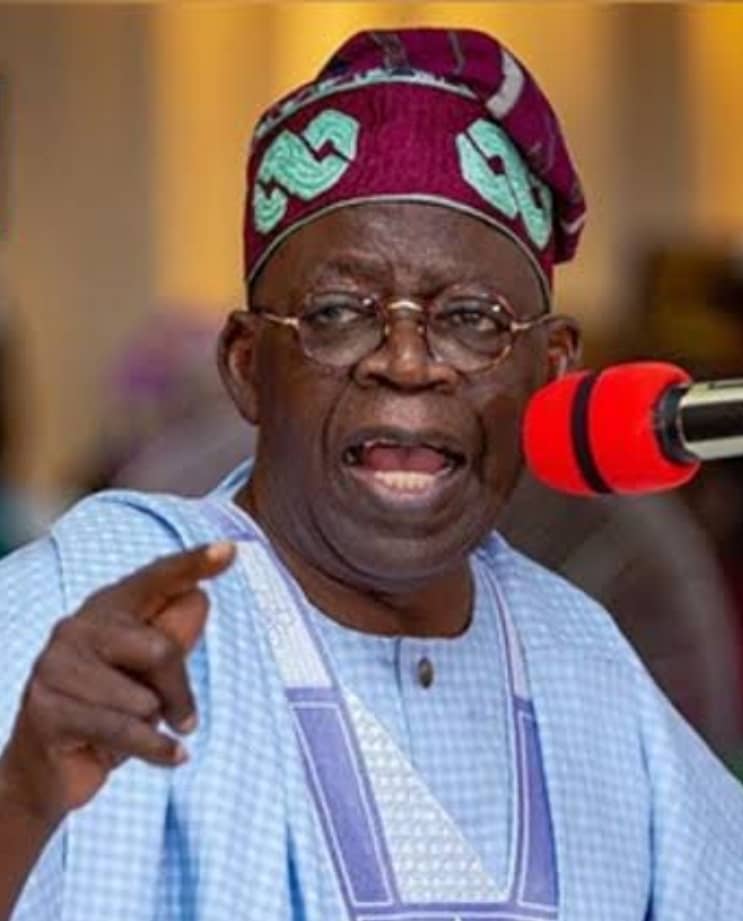
PRESIDENT TINUBU AND JUDICIAL RENEWAL IN NIGERIA
(Why Better Judicial Welfare and Justice Sector Reform Strengthen the Case for the President’s Reelection)
By Sylvester Udemezue
INTRODUCTION
A government’s commitment to justice becomes meaningful when it provides the people, resources and legal framework that courts need to work. Judges require decent conditions of service; litigants require accessible procedures; and the public requires institutions capable of deciding disputes fairly and independently. These are practical responsibilities against which a presidency should be assessed. President Bola Ahmed Tinubu’s record contains substantial interventions in judicial welfare, court capacity and the wider administration of justice. The 2024 remuneration reform stands prominently among them. Taken with increased funding, judicial appointments, technological legislation and access-to-justice programmes, it supplies a serious, evidence-based reason to support his reelection. The strongest argument rests on specific achievements and their practical value. Enacted laws, completed facilities and services already delivered deserve recognition. Policy frameworks and projects still requiring implementation must be assessed according to their actual stage. Parliament, the National Judicial Council, judicial leadership, the legal profession and development partners also deserve their proper share of credit.
HIGHER JUDICIAL SALARIES AND ALLOWANCES
President Tinubu assented to the Judicial Office Holders (Salaries and Allowances, etc.) Act 2024 on 09 August 2024, with its statutory schedule taking effect on 01 January 2024. The reform was a 300 per cent increase in judicial remuneration. According to the Nigerian Bar Association, the previous review had occurred in 2007, seventeen years earlier. The Judicial Office Holders Act covers constitutional judicial office holders and expressly addresses retirement allowances linked to their last salaries and allowances. Its importance extends beyond higher take-home pay. Adequate remuneration can support recruitment, retention and financial security, strengthening the conditions in which judges exercise independent judgment. Better pay must operate alongside ethical discipline and accountability. It cannot, by itself, establish that corruption or delay has disappeared. Judicial remuneration is a public obligation, and its beneficiaries owe fidelity to the Constitution and the law. The constitutional protection of judicial pay under section 84 and the international recognition of adequate remuneration as an element of judicial independence explain why this reform matters to every litigant.1 In this writer’s opinion, under the principle of “What is sauce for the goose is sauce for the gander,” Magistrates and other court workers require separate, equal attention, although Magistrates are under the care and control of State Governments, not the federal Government.2
UNIFORM RETIREMENT AGE AND PENSION RIGHTS
On 08 June 2023, President Tinubu assented to the Constitution’s Fifth Alteration No 37, which harmonised compulsory retirement at seventy years for judicial officers of the superior courts, extending the service period of categories previously retiring at sixty-five. The revised Section 291 of the Constitution also addressed pension entitlements.3 For qualifying retirement at or after sixty-five, the revised framework links full lifetime pension to at least ten years of judicial service, with proportionate entitlement for shorter service. Retaining experienced judges for longer can preserve institutional memory and adjudicative expertise. Clear retirement and pension rules also improve career planning, although it must be stated that these benefits depend on continuing attention to competence, health and responsible succession.
A SUBSTANTIALLY LARGER JUDICIAL FUNDING ALLOCATION
The 2024 budget increased the judiciary’s statutory transfer from ₦165 billion to approximately ₦342 billion, according to the official statement accompanying presidential assent to the budget.4 This enlarged the resources authorised for judicial operations and development. Adequate financing can support research, staff, maintenance and facilities. An appropriation is an enabling commitment; actual releases, expenditure and results remain the proper measures of implementation.
RESTORING THE SUPREME COURT TO TWENTY ONE JUSTICES
The Supreme Court of Nigeria has been short of its full capacity for many years. This trend was changed by President Tinubu through the appointment of eleven additional Supreme Court justices in 2024, which brought the Court to its full complement of twenty-one. The Presidency confirmed that position at the National Summit on Justice in April 2024.5 A fuller Bench strengthens the capacity to distribute work and constitute panels. It provides a practical foundation for addressing a demanding appellate docket, although a numerical reduction in pending appeals requires separate evidence.
ADDITIONAL JUDICIAL APPOINTMENTS BELOW THE SUPREME COURT
Further appointments increased adjudicative capacity in other courts. The FCT High Court’s official account records the swearing-in of twelve new judges on 10 July 2024.6 Additional judges can distribute trial work more widely and improve the capacity to hear matters. Note that these appointments involve constitutionally assigned responsibilities shared by judicial bodies, the executive and other regulators in the legal profession; their effectiveness also depends on supporting staff and courtrooms.
MODERNISING THE LAW OF ELECTRONIC EVIDENCE
The Evidence (Amendment) Act 2023, assented to on 12 June 2023, updated the framework for electronic records, digital signatures and electronically sworn affidavits, subject to the applicable statutory requirements.7 The reform gives courts a more suitable legal framework for disputes involving modern transactions and digital communications. It also creates opportunities to reduce travel and administrative burdens in affidavit preparation. Electronic evidence was already recognised before 2023; this amendment developed the existing framework.
DIGITAL AND REMOTE NOTARISATION
The Notaries Public Act 2023 provides a statutory framework for digital and remote notarisation, electronic registration and recognition of digitally notarised documents. Compliance requirements include safeguards concerning identity, signatures and records.8
Properly implemented, these provisions make document authentication more accessible to people across different locations, including Nigerians abroad. They can reduce avoidable journeys while improving the traceability of notarial acts.
A COMPLETED COURT OF APPEAL COMPLEX IN ABUJA
The permanent Court of Appeal Abuja Division complex at Dakibiyu was commissioned in June 2026. The Presidency reported two large and eight smaller courtrooms; the Court’s President explained that the division had previously operated with only two courtrooms.9 This is a concrete improvement in courtroom capacity and the working environment. More available hearing space can support concurrent sittings and better scheduling. Its eventual effect on disposal times should be measured against actual caseload statistics. However, in this writer’s opinion, the building of court complexes should be undertaken by the leaderships of the courts themselves.
COMPLETED ACCOMMODATION FOR JUDICIAL OFFICERS
Ten housing units for Federal High Court judges at Katampe, Abuja, were commissioned in June 2026 under the administration’s FCT infrastructure programme.10 Secure and suitable accommodation improves judicial welfare and can reduce avoidable pressures on officers carrying demanding responsibilities. Housing provision should remain transparent and institutionally administered, supporting the independence that public funding is intended to protect.
LEGAL AID AND ASSISTANCE AT POLICE STATIONS
In its May 2025 performance report, the Federal Ministry of Justice stated that the Legal Aid Council had handled 2,790 criminal cases and 1,021 civil matters during the reporting period beginning in October 2024. It also reported assistance to 637 suspects under the Police Duty Solicitor Scheme.11 These are reported services delivered to people who might otherwise struggle to obtain representation. Their practical contribution is access to advice, assistance with bail and a better opportunity to participate effectively in legal proceedings.
RELIEF FOR INDIGENT PRISONERS UNABLE TO PAY FINES
In November 2023, Nigeria’s Ministry of Interior launched a programme targeting 4,068 inmates detained because they could not pay fines or compensation. The official account reported that ₦585 million had been raised from corporate contributors and recorded thirty-seven releases at the Kuje launch.12 The programme addressed an identifiable form of detention driven by poverty and created a route to lawful release. It should be credited as a targeted decongestion intervention, rather than treated as proof that overcrowding across the correctional system has been resolved.
A NATIONAL POLICY SUPPORTING ARBITRATION AND OTHER DISPUTE RESOLUTION
The Federal Executive Council approved the National Policy on Arbitration and Alternative Dispute Resolution 2024–2028 in July 2024. The NBA subsequently circulated the policy, highlighting its application across federal ministries, departments and agencies.13 The policy encourages suitable disputes to be resolved through arbitration, mediation and related processes. Effective implementation can offer parties more appropriate routes to settlement and help reserve court time for matters requiring adjudication. The 2023 Arbitration and Mediation Act itself predates Tinubu’s presidency; the later policy is the relevant achievement here.
PLEA BARGAINING GUIDANCE AND PRACTICAL TRAINING
The Justice Ministry reported in September 2025 that it had rolled out plea bargaining guidelines and trained more than four hundred stakeholders.14 Consistent guidance and competent implementation can help suitable cases conclude without unnecessary full trials, while preserving voluntariness, judicial oversight and victims’ interests. This advances the implementation of powers already contained in criminal justice legislation.
MINIMUM STANDARDS AND RESTORATIVE JUSTICE FRAMEWORKS
In April 2026, the Justice Ministry unveiled the National Minimum Standards 2025 and the Harmonized Restorative Justice Training Curriculum and Manual 2025.15 These frameworks provide a basis for more consistent practice, professional training, victim participation and appropriate non-custodial responses. Their intended value includes repairing harm and reducing unnecessary reliance on imprisonment. Nationwide improvements in backlog or rehabilitation require evidence from implementation.
A NATIONAL JUSTICE POLICY AND CONTINUING PROFESSIONAL EDUCATION
Stakeholders at the April 2024 National Summit on Justice adopted the revised National Policy on Justice 2024–2028. Continuing judicial education also remained on the agenda, including the October 2026 judicial workshop on financial crime, prosecution and procedural challenges.16 Coordination can identify failures that no single institution can solve, while training helps judges and practitioners address evolving evidence and complex cases. These are investments in institutional competence whose quality should be judged by changes in practice.
REVIEW AND CONSOLIDATION OF FEDERAL LAWS
The Federal Government inaugurated a committee in October 2024 to review, update and consolidate the Laws of the Federation. An official April 2025 progress report recorded substantial review work.17 An accurate and accessible compilation helps courts and lawyers identify the applicable law, amendments and repeals. The project’s establishment and reported work are verifiable; comprehensive legal change depends on the appropriate publication and legislative steps.
DIGITAL COURT ADMINISTRATION AND INFORMATION SYSTEMS
Nigeria’s Ministry of Justice described the Justice Information Management System as being developed in September 2025. Separately, the FCT administration approved court digitisation contracts in September 2026. These initiatives aim to improve records, information exchange and case tracking; approval and development must be distinguished from completed nationwide deployment.18 During the same period, the Supreme Court launched electronic case-management measures in July 2026. That reform is properly credited to judicial leadership. It belongs in an account of developments during the presidency, while evidence of a personal presidential role should not be assumed.19 Reliable digital systems can make files easier to retrieve, support scheduling and create audit trails. However, these benefits require trained personnel, dependable infrastructure and safeguards for confidential records.
A FURTHER CRIMINAL JUSTICE REFORM BILL
In July 2026, Tinubu transmitted an Administration of Criminal Justice Bill to the National Assembly. The official legislative report described proposals addressing procedural delays, witness support and institutional monitoring.20 Transmission demonstrates an effort to continue reform althiough a bill’s proposed improvements become legal achievements only through enactment and effective implementation. Its prospective benefits should therefore be presented as part of the reform agenda.
CONCLUSION
Taken together, these interventions address several practical needs of justice delivery: judicial welfare, experienced personnel, hearing capacity, modern evidence rules and access to legal help. Some have already changed the legal framework or delivered services and facilities. Others establish a platform from which further improvements can follow. For citizens, the issue is concrete. A person defending a home, seeking unpaid wages, contesting detention or enforcing a commercial agreement needs a court capable of giving an independent and timely decision. Investment in the conditions that make such decisions possible has public value, even when its benefits are less immediately visible than a road or bridge. In my view, this record strengthens President Tinubu’s case for reelection in 2027. He deserves credit for advancing a long-delayed remuneration reform and supporting wider institutional renewal. That credit is compatible with demanding better implementation, transparent expenditure and measurable improvements in access, fairness and case disposal. The purpose of supporting judicial reform is to build courts that serve every Nigerian, including those who oppose the government. Sustaining that purpose is a worthy democratic ambition. The progress already made supplies a substantial reason to entrust Tinubu with a further opportunity to deepen it.
Respectfully,
Sylvester Udemezue (Udems)
Proctor, The Reality Ministry of Truth, Law, and Justice (TRM)
080212365545
udems@therealityministry.ngo
(16 October 2026)
ENDNOTES
- Constitution of the Federal Republic of Nigeria 1999, s 84; UN Basic Principles on the Independence of the Judiciary (1985), principles 1, 2, 7 and 11 <https://hrlibrary.umn.edu/instree/i5bpij.htm> accessed 16 October 2026. ↩
- Judicial Office Holders (Salaries and Allowances, etc.) Act 2024; Nigerian Bar Association, ‘Statement on the Signing into Law of the Judicial Office Holders (Salaries and Allowances, etc.) Act 2024’ (21 August 2024) <https://blog.nigerianbar.org.ng/wp-content/uploads/2024/08/STATEMENT-ON-JUDICIAL-SALARIES-ACT.pdf>; State House, ‘President Tinubu Swears in Justice Kekere-Ekun as Acting Chief Justice of Nigeria’ (23 August 2024) <https://statehouse.gov.ng/president-tinubu-swears-in-justice-kekere-ekun-as-acting-chief-justice-of-nigeria/> accessed 16 October 2026. ↩
- Constitution of the Federal Republic of Nigeria 1999 (Fifth Alteration) (No 37) Act 2023, substituting s 291 <https://placng.org/i/wp-content/uploads/2023/06/Constitution-of-the-Federal-Republic-of-Nigeria-1999-Fifth-Alteration-No.-37-Act-2023-.pdf> accessed 16 October 2026. ↩
- State House, ‘President Tinubu Signs 2024 Budget of Renewed Hope’ (1 January 2024), published by FMINO <https://fmino.gov.ng/president-tinubu-signs-2024-budget-of-renewed-hope-directs-mdas-to-provide-monthly-performance-reports/> accessed 16 October 2026. ↩
- State House, ‘President Tinubu to Judiciary Our Justice System Must Guarantee Well-being of Nigerians Economic Growth’ (24 April 2024) <https://statehouse.gov.ng/president-tinubu-to-judiciary-our-justice-system-must-guarantee-well-being-of-nigerians-economic-growth/> accessed 16 October 2026. ↩
- FCT High Court, ‘Appointment and Elevation of Judges’ (10 July 2024) <https://www.fcthighcourt.gov.ng/cjn-swears-in-new-judges-to-the-court-of-appeal-and-to-fct-high-court/> accessed 16 October 2026. ↩
- Evidence (Amendment) Act 2023, ss 2–8 and 10; WIPO Lex, ‘Evidence (Amendment) Act 2023’ <https://www.wipo.int/wipolex/en/legislation/details/22678> accessed 16 October 2026. ↩
- Notaries Public Act 2023, ss 4–9 <https://lawcarenigeria.com/notaries-public-act-2023/> accessed 16 October 2026. ↩
- State House, ‘President Tinubu to Judges Let Justice Be Swift Fair’ (June 2026) <https://statehouse.gov.ng/president-tinubu-to-judges-let-justice-be-swift-fair/> accessed 16 October 2026. ↩
- State House, ‘President Tinubu True Judicial Independence Built on Officers’ Dignity’ (17 June 2026) <https://statehouse.gov.ng/president-tinubu-true-judicial-independence-built-on-officers-dignity/> accessed 16 October 2026. ↩
- Federal Ministry of Justice, ‘Stakeholders Citizens Engagement Fagbemi Rolls Out Achievements Calls for Feedback’ (8 May 2025), published by FMINO <https://fmino.gov.ng/stakeholders-citizens-engagement-fagbemi-rolls-out-achievements-calls-for-feedback/> accessed 16 October 2026. ↩
- Ministry of Interior, ‘Dr Tunji-Ojo and Stakeholders Facilitate Release of 4,068 Inmates’ (20 November 2023), published by FMINO <https://fmino.gov.ng/dr-tunji-ojo-and-stakeholders-facilitates-release-of-4068-inmates/> accessed 16 October 2026. ↩
- Nigerian Bar Association, ‘Federal Ministry of Justice Unveils the National Policy on Arbitration and Alternative Dispute Resolution 2024–2028’ (11 February 2025) <https://blog.nigerianbar.org.ng/2025/02/11/federal-ministry-of-justice-unveils-the-national-policy-on-arbitration-and-alternative-dispute-resolution-adr-2024-2028/> accessed 16 October 2026. ↩
- Federal Ministry of Justice, ‘President Tinubu Committed to Building an Efficient Judiciary System’ (23 September 2025), published by FMINO <https://fmino.gov.ng/president-tinubu-committed-to-building-an-efficient-judiciary-system-agf-fagbemi/> accessed 16 October 2026. ↩
- Federal Ministry of Justice, ‘Federal Ministry of Justice Unveils Two Landmark Documents in Quest to Deepen Criminal Justice Reform’ (14 April 2026), published by FMINO <https://fmino.gov.ng/federal-ministry-of-justice-unveils-two-landmark-documents-in-quest-to-deepen-criminal-justice-reform/> accessed 16 October 2026. ↩
- Federal Ministry of Justice, ‘Media Briefing by Dr Babatunde Ajibade SAN in Respect of the National Summit on Justice 2024’ (26 April 2024) <https://fmino.gov.ng/media-briefing-by-dr-babatunde-ajibade-san-in-respect-of-the-national-summit-on-justice-2024/>; FMINO, ‘President Tinubu to Judiciary Probe Prosecution Strategies Seal Procedural Gaps Exploited by Criminals’ (13 October 2026) <https://fmino.gov.ng/president-tinubu-to-judiciary-probe-prosecution-strategies-seal-procedural-gaps-exploited-by-criminals/> accessed 16 October 2026. ↩
- Federal Ministry of Justice, ‘FG Inaugurates 46 Man Committee to Review Update Outdated Laws’ (24 October 2024) <https://fmino.gov.ng/fg-inaugurates-46-man-committee-to-review-update-outdated-laws/>; ‘Review of LFN 2004–2024 Fagbemi Advocates Unity Steadfastness’ (14 April 2025) <https://fmino.gov.ng/review-of-lfn-2004-2024-fagbemi-advocates-unity-steadfastness/> accessed 16 October 2026. ↩
- Federal Ministry of Justice, ‘Federal Justice Sector Reform Coordinating Committee’ (10 September 2025) <https://justice.gov.ng/federal-justice-sector-reform-coordinating-committee-fjsrcc-2/>; Voice of Nigeria, ‘FCT High Courts Set for Digital Transformation’ (30 September 2026) <https://von.gov.ng/fct-high-courts-set-for-digital-transformation/> accessed 16 October 2026. ↩
- Voice of Nigeria, ‘Supreme Court Launches Digital Case Management Platform’ (1 July 2026) <https://von.gov.ng/supreme-court-launches-digital-case-management-platform/> accessed 16 October 2026. ↩
- National Assembly Library Trust Fund, ‘President Tinubu Transmits Historic 2026 Criminal Justice Reform Bill to National Assembly’ (12 July 2026) <https://naltf.gov.ng/president-tinubu-transmits-historic-2026-criminal-justice-reform-bill-to-national-assembly/> accessed 16 October 2026. ↩